

Break Free from Imposter Syndrome: Learn to Feel Like You Belong

“I don't belong here.”
That's what a client tells me. She has the skills. The experience. The results.
And yet, she still feels like an imposter.
Maybe some of this sounds familiar:
You question whether you deserve your place.
You're afraid someone will discover you're not good enough.
You spend a lot of time thinking before you act.
You downplay your achievements.
Feeling like an imposter, at work or in everyday life, is more common than we might think. But before trying to get rid of that feeling, what if we took a moment to understand what it might be doing for you?
What is imposter syndrome?
Imposter syndrome describes a persistent feeling that you don't deserve your place, even when there's clear evidence of your abilities. People who experience it may:
Credit their success to luck.
Doubt themselves despite strong results.
Worry about being exposed as a fraud.
It doesn't necessarily mean you lack ability. It may be a difference between how others see your abilities and how you see yourself.
What purpose might imposter syndrome serve?
It's a question we don't often ask. But what if your self-doubt is trying to help in some way? What might it be trying to prevent?
Sometimes, self-doubt can feel like a form of protection against:
Being judged.
Failing.
Being rejected.
Standing out or taking up too much space.
In other words, you can explore imposter syndrome as a possible protective response. Even if the feeling is uncomfortable, it may be trying to keep you away from something you fear.
If the doubt disappeared, what might feel scary?
Here's the first question:
If you no longer had that doubt, what might become possible?
Take a moment to imagine it.
Now a second question:
What might feel uncomfortable about that possibility?
Sometimes, less self-doubt would also mean:
More visibility.
More responsibility.
More exposure.
More risks.
Maybe the important question isn't just how to remove the doubt, but what the doubt might be protecting you from.
If your thoughts start racing as you read, you can take a moment to settle yourself. Here's a simple grounding exercise inspired by NLP.
Download my free two-minute grounding exercise to help you find some calm and a little more clarity. (only in french for now)
What if you no longer felt like an imposter?
I invite you to imagine this. You're in a situation where self-doubt would usually appear. This time, it isn't there.
How do you feel?
How do you carry yourself?
What do you feel ready to try?
Take a close look. You're not imagining someone else. It's still you, without that layer of self-protection.
What belief might be fuelling imposter syndrome?
Sometimes imposter feelings are connected to a belief you've been carrying, perhaps without realizing it:
I'm not competent enough.
I don't deserve to be here.
Someone is going to find out I'm not as capable as they think.
As long as a belief feels true, doubt may keep coming back. The encouraging part is that beliefs can change over time.

Coaching exercise: explore imposter syndrome with the Belief Museum
I'd like to offer you a simple reflection exercise. Give yourself a few minutes to really try it.
1. Identify the belief
Complete this sentence: Deep down, I believe that…
2. Give it a shape
Imagine an object, or choose a real one, that represents this belief.
3. Acknowledge its role
You might say: “Thank you for being there. Thank you for trying to protect me. Thank you for the role you've played.” Then, if it feels right: “I'm ready to try something different now.”
4. Create a new belief
Today, I'd like to believe that…
For example:
I belong, even while I'm learning.
I can learn as I go.
My worth doesn't depend on being perfect.
5. Choose a new object
Connect your new belief with a simple object.
6. Make the transition
Symbolically set down the first object. Keep the second one close. You're not erasing a part of yourself. You're allowing yourself to grow.
How can you work through imposter syndrome over time?
Moving beyond imposter feelings involves more than telling yourself to think differently. It can help to:
Understand what the doubt might be doing for you.
Identify the belief behind it.
Create a new point of reference.
Take action, even when it feels uncomfortable.
Confidence develops through experience and action, not just by waiting until you feel ready.
You were never an imposter
You've learned to doubt yourself, and perhaps that doubt once served a purpose. Today, you can also learn to recognize that you belong.
FAQ — Imposter syndrome
Why do I experience imposter syndrome?
Imposter feelings may be connected to beliefs about not being good enough, fear of judgment, or fear of making mistakes. They don't automatically mean you lack the skills to succeed.
How can I stop feeling like an imposter?
There may not be an instant off switch. Exploring your self-doubt, recognizing your strengths, and gradually questioning limiting beliefs can help you relate to it differently.
Is imposter syndrome the same as low self-confidence?
Not always. Even capable and successful people can question whether they deserve their accomplishments. It often involves how they interpret their own abilities.
How can I feel more deserving of my place?
By recognizing your experience, challenging unhelpful beliefs, and taking small steps forward even when you feel uncertain. A sense of belonging can develop gradually.
You don't have to prove that you belong. You can begin by giving yourself permission to believe it.
Want to explore further?
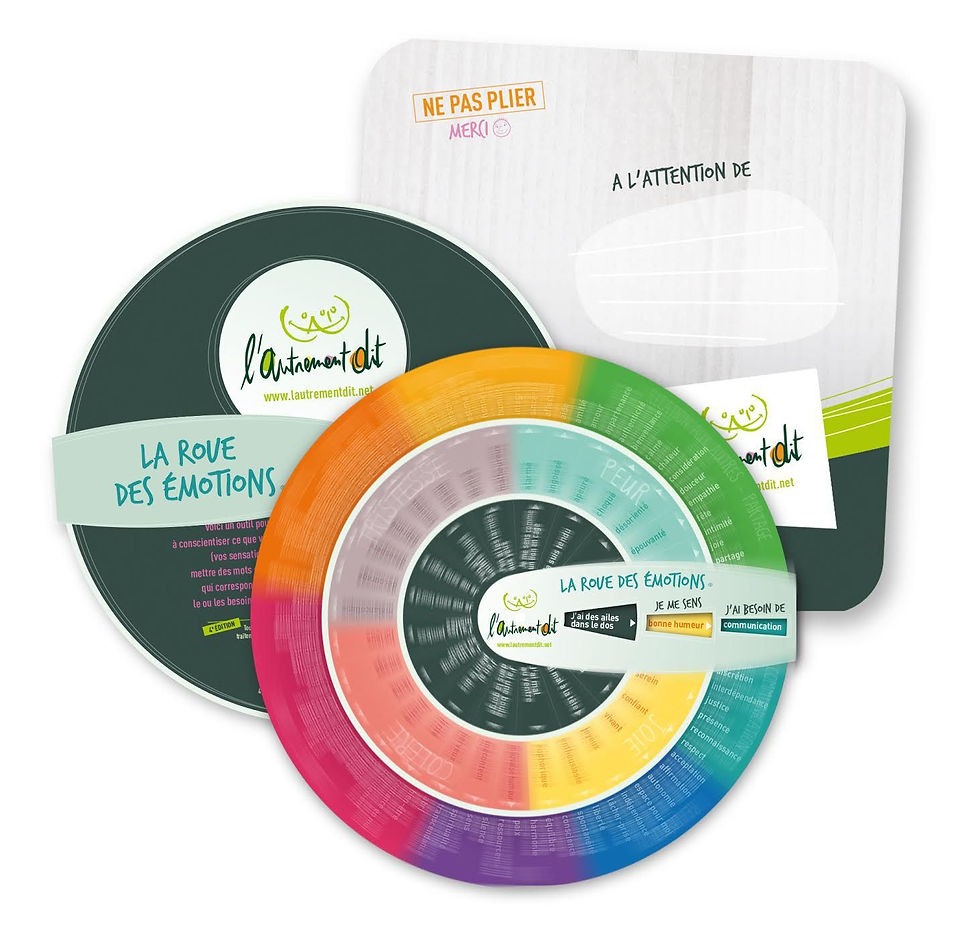
If you'd like to better understand what's happening inside you, discover the Emotions Wheels. It's a simple, practical tool that can help you:
Put words to what you're feeling.
Understand the need behind the emotion.
Find more clarity and make choices that fit your needs.
Because underneath imposter feelings, there may be an emotion that deserves to be heard.


Comments