
What Is an Emotion Wheel and How to Use It (Simple Guide)

Simple Definition
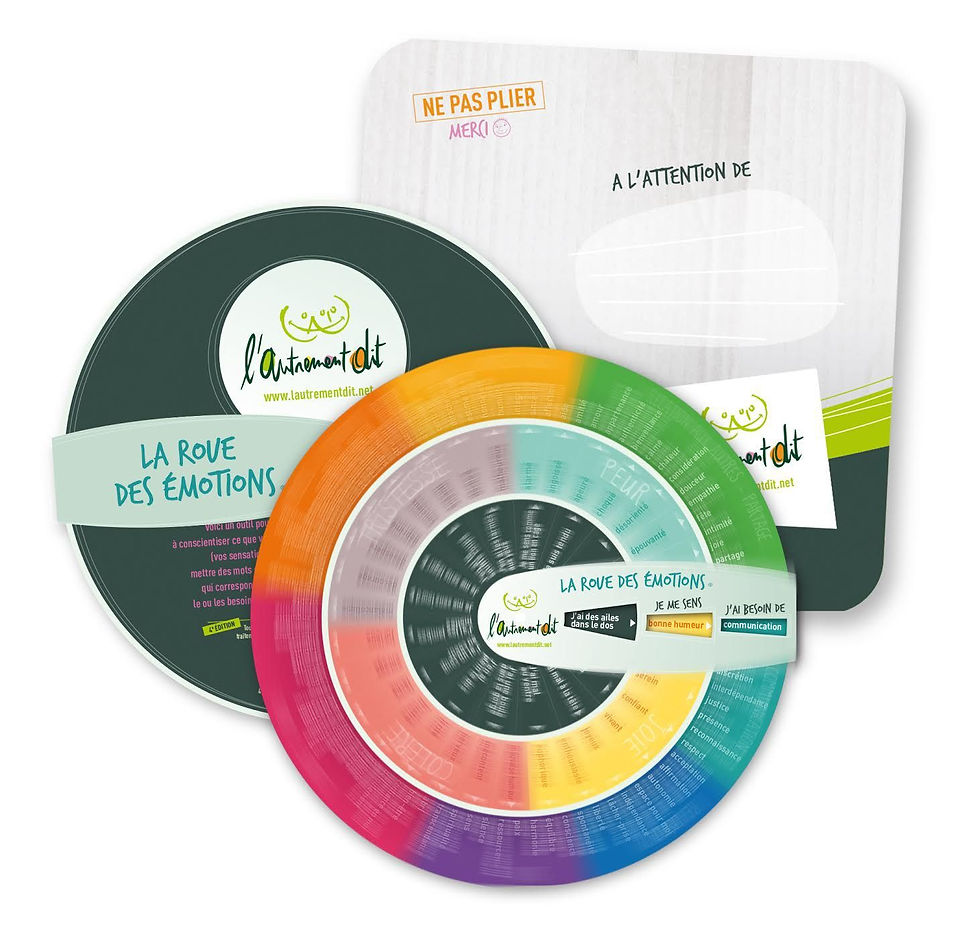
An emotion wheel is a visual tool that helps you identify, name, and understand your emotions so you can better respond to your needs.
Some emotion wheels stop at simply naming emotions.
The L’Autrement Dit emotion wheel goes further.
It helps you understand what you truly need.
And that makes all the difference.
Why It Matters
Many people feel emotions without knowing what to do with them.
The result:
confusion
impulsive reactions
misunderstandings in relationships
An effective emotion wheel helps you:
Clarify what you’re feeling
Understand the message behind the emotion
Take concrete action
Without this last step, people often stay stuck in their emotions.
How to Use an Emotion Wheel (3-Step Method)
Some emotion wheels are limited to identifying emotions.
With the L’Autrement Dit emotion wheel, the approach is more complete.
It works in 3 steps:
1. Notice Your Internal Weather (Your Body)
Before naming an emotion, start by observing what’s happening in your body:
tension
restlessness
fatigue
heaviness
For children (or visual learners), this can be represented by:
sunshine
clouds
storms
This makes self-awareness more accessible and intuitive.
2. Identify the Emotion
Next, put a word on what you’re feeling:
anger
sadness
fear
joy
Then go deeper:
frustration
disappointment
anxiety
The illustrated version helps children express their emotions.
The advanced vocabulary version helps adults go beyond surface-level understanding.
3. Identify the Need Behind the Emotion (Key Step)
This is where the real work happens.
Every emotion is linked to a need:
need for respect
need for comfort
need for safety
etc.
The essential question becomes: “What do I need right now?”
This step transforms emotion into action.
Real-Life Example
Situation: You feel irritated after a conversation.
Step 1 — Internal Weather : Tension in the body, restlessness → “storm”
Step 2 — Emotion : Frustration
Step 3 — Need : Need to be heard
Action : Express your need calmly or take a step back
Result: You become aware → you act → you feel more at ease
Common Mistakes
Stopping at the emotion
Saying “I’m angry” is not enough
Without identifying the need, nothing changes
Ignoring the body
Your body gives the first signals
Listening to it makes the process easier
Using the tool only in crisis
Consistency is what creates real change
Thinking it’s only for children
Adults benefit just as much—if not more
A Tool That Goes Beyond Emotions
An effective emotion wheel does more than name what you feel.
It helps you:
understand
make meaning
take action
This ability to connect emotion → need → action is what truly makes the difference.

About Me
I’m Mélanie Gatt, a coach, hypnotherapy practitioner, and emotion specialist.
I help adults better understand what they’re feeling and turn their emotions into concrete actions using simple and effective tools.

Comments